






What Is Rhinoplasty in Japan? Procedures, Costs, and Risks Explained | Tokyo Bisen Clinic, Shibuya
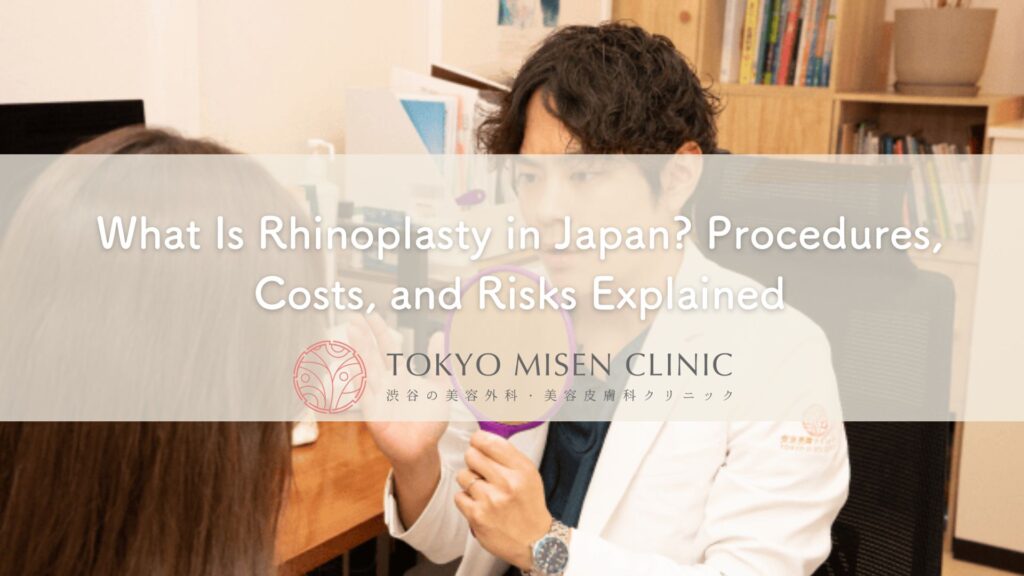
“My nose bothers me, but what does surgery actually involve?” Many people feel exactly this uncertainty.
Here’s the bottom line: rhinoplasty in Japan covers several distinct procedures, and the right method differs entirely according to your concern, the shape of your nose, and the result you want. Whether you want a higher bridge, a cleaner tip, or improvement to a bulbous tip, the procedure to choose changes with the goal — so accurately identifying your own concern comes first.
This article explains the types of rhinoplasty performed in Japan, typical costs, downtime, and common risks as clearly as possible. We hope it helps anyone considering surgery choose a clinic without regret (results and recovery times vary from person to person).
The concerns people bring to a nose consultation
From “it just bothers me” to seriously considering surgery
Concerns about the nose differ widely. “My nose is low and my face looks flat.” “My tip is round and stands out.” “My nostrils spread sideways.” “Without a defined bridge my face lacks definition.” What people mean by a nose complex is different in every case.
We also often hear: “I want surgery, but I don’t want a face that looks obviously operated on.” The wish for a natural result is a theme shared by almost everyone considering rhinoplasty today.
Putting into words which part you want to change, and how, is the starting point for choosing a procedure.
Careful: rhinoplasty is not only about implants
Many people picture rhinoplasty as inserting a silicone implant to raise the nose. In reality, there are many procedures, and the options change considerably according to the concern.
Beyond dorsal augmentation using an implant, there is tip plasty using your own cartilage, thread-based minor procedures, and surgery to narrow the nostrils — a range of methods for different goals. Stopping your research on the assumption that implants are the only option risks narrowing your choices unnecessarily.
Anxiety about surgery usually comes from a lack of information
Most of the anxiety people feel when first considering rhinoplasty comes down to not knowing how the result will look, having no sense of how long downtime lasts, and fearing regret.
Much of this can be resolved with accurate information and a careful consultation with a doctor. Acquiring basic knowledge of the procedures is the first step toward easing that anxiety.
The main types of rhinoplasty in Japan
The standard procedure for a higher, cleaner bridge line. An implant made of medical-grade silicone is placed over the bone and cartilage of the nose. Because it is performed through a small incision inside the nostril, scarring on the surface of the face is unlikely. The implant is usually shaped to order for the patient’s bone structure, and a natural line can be expected (results vary). Suited to concerns about a low nose or an undefined bridge.
Chosen by people concerned about a bulbous or round tip. Methods include harvesting the patient’s own ear cartilage and grafting it to the tip, or adjusting the fat and soft tissue there. Because it can be performed with the patient’s own tissue rather than a foreign material, good integration with the body can be expected. The tip is also an area where refinement alone readily changes the impression of the whole face (results vary).
Addresses concerns about nostrils that spread sideways or nostril openings that stand out. The base of the nostril is excised and sutured to narrow its width. An incision may be placed on the outside, but it is generally made along the natural crease of the nose so that the scar is less noticeable. The effect tends to be long-lasting (results vary).
Other options: hyaluronic acid injection and thread rhinoplasty
Hyaluronic acid injection and thread-based minor procedures shape the nose without a scalpel. Downtime is short and they are easy to try. However, the effect lasts a shorter time than surgery, and in most cases is gradually absorbed and reverts over several months to about a year. Injection procedures also carry reported risks such as vascular compromise, depending on the site and the technique. They can be an option for someone who wants to try something first, but surgery is the realistic consideration where a long-term result is wanted.
Comparing the advantages and drawbacks of each procedure
Dorsal augmentation (implant): advantages and drawbacks
✅ Advantages
⚠️ Drawbacks and risks
Tip plasty (autologous cartilage graft): advantages and drawbacks
✅ Advantages
⚠️ Drawbacks and risks
Typical cost and downtime (general reference figures)
| Procedure | Typical cost | Typical downtime |
|---|---|---|
| Dorsal augmentation (implant) | Around ¥300,000–700,000 | About 1–2 weeks |
| Tip plasty (autologous cartilage) | Around ¥200,000–500,000 | About 1–2 weeks |
| Alar reduction | Around ¥150,000–400,000 | About 1–2 weeks |
| Hyaluronic acid injection (non-surgical) | Around ¥50,000–200,000 | A few days to about a week |
※ The figures above are general reference values only. They differ considerably by clinic and by the combination of procedures, and individual variation applies, so always confirm with your doctor. For Tokyo Bisen Clinic’s fees, please contact us or confirm at an initial consultation (¥2,200 including tax).
Consult & book via official LINE
Understanding the risks and cautions correctly
“Cosmetic surgery carries no risk” is a serious misconception
Cosmetic surgery is medical treatment, and every procedure carries some degree of risk. It is important to proceed with that premise understood. Representative risks include the following.
⚠️ A common misconception: “injections carry no risk” is wrong
Non-surgical treatments such as hyaluronic acid injection also carry reported serious risks including vascular compromise and tissue necrosis, depending on the volume, the site, and the technique. Avoiding a scalpel does not reduce risk to zero. Whatever the treatment, it is important that it be performed following proper examination and diagnosis by a doctor.
What to know during downtime
After surgery on the nose, swelling, bruising, and changes in sensation can occur. In most cases swelling peaks around two to three days after surgery and settles gradually from there. However, it is not unusual for the final result to take several months to stabilize (results vary).
Points to be careful about during downtime:
Revision surgery is sometimes necessary
If you are dissatisfied with the result or a complication occurs, revision surgery may be needed. Revision is often technically more difficult than the first operation, which makes the initial choice of clinic and procedure extremely important. Rather than choosing a clinic because it is cheap or close by, we recommend weighing the surgeon’s experience, diagnostic ability, and aftercare system as well.
Choosing a clinic and a procedure for a natural result
Check whether the procedure suits your bone structure
One of the most common sources of regret is having surgery matched to a fashionable shape that did not suit the patient’s own face. The shape of the nose has to be seen in the balance of the whole face. Raising only the nose while ignoring harmony with the eyes, mouth, jaw, and bone structure can produce an unnatural impression.
It is important to choose a doctor who can accurately assess the factors that vary between individuals — bone structure, skin thickness, cartilage strength — and recommend a procedure on that basis.
Five things to confirm at your consultation
For those considering rhinoplasty in Shibuya and central Tokyo
Shibuya is an area where cosmetic clinics are concentrated. Precisely because there are so many options, sorting through the information becomes difficult. When looking for a clinic in Shibuya, we recommend comparing on the basis of the doctor’s approach, diagnostic ability, and aftercare system — not location and price alone.
Tokyo Bisen Clinic’s approach to rhinoplasty
At Tokyo Bisen Clinic in Shibuya, Tokyo, we practice cosmetic surgery and aesthetic dermatology, rhinoplasty included, according to the following principles.
We employ no counselors; a doctor handles examination, diagnosis, and treatment proposals from the outset. Our director’s principle is accurate diagnosis, the appropriate procedure, at a fair price.
We provide private treatment rooms designed with your privacy in mind. Because we work strictly by appointment, you can visit without the stress of waiting.
If anything concerns you after surgery, a dedicated free line is available around the clock. A one-year guarantee is also in place.
Rhinoplasty is one of the procedures we particularly focus on. Drawing on knowledge and technique from both cosmetic and plastic surgery, we aim to recommend an approach suited to each person’s bone structure and concerns.
Frequently asked questions
📋 Summary
Why not start by talking to a doctor?
Shibuya, Tokyo — 1–2 minutes’ walk from Shibuya Station. With no counselors, the director speaks with you directly from the first visit. There is no hard sell. Please feel free to get in touch.
Consult & book via official LINEAbout the supervising doctor
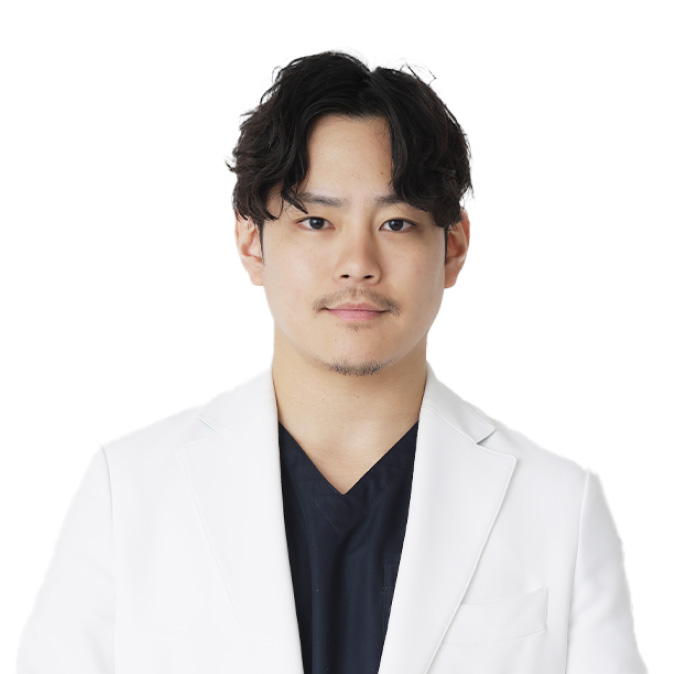
Our clinic places particular emphasis on attentive, individualized aftercare, offering everything from aesthetic dermatology to cosmetic surgery and helping each patient find the option that suits them best — from skin treatments and minor procedures to more significant surgery.
Qualifications and affiliations: Born in Oita Prefecture. BEng, Department of Engineering Physics, Kyoto University. MD, Nara Medical University. Studied at the Joslin Diabetes Center, Harvard Medical School. Previously at Nara Medical University Hospital, Kindai University Nara Hospital, and Tenri Hospital. Founder, Tokyo Bisen Clinic.
※ This article was prepared under medical supervision in accordance with Japan’s medical advertising guidelines. Treatment outcomes, costs, and timelines vary by individual. Please confirm details with a doctor.


“With rhinoplasty, choosing the procedure while looking at the balance of the whole face is extremely important. Rather than jumping at a fashionable shape, our role is to accurately assess the condition of each person’s bone structure, skin, and cartilage, and then recommend what is genuinely the right choice. That is also why I speak with you directly from the start, with no counselor in between. We never rush anyone into surgery. We proceed through careful dialogue, so that patients can reach a decision they are satisfied with themselves.”