






Rhinoplasty in Japan: Types, Downtime, and How to Choose | A Shibuya Cosmetic Surgeon Explains
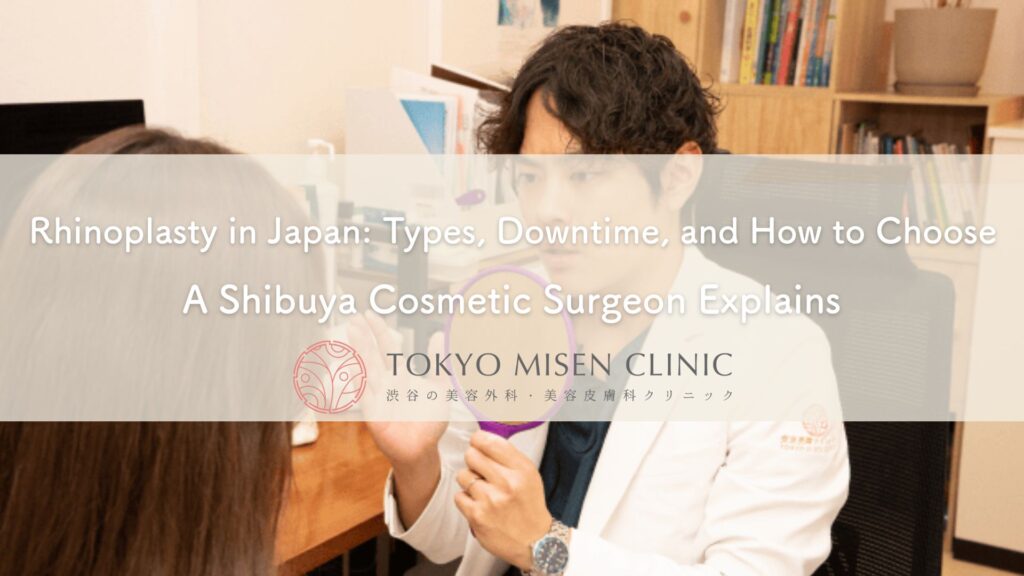
“I hate looking at my face straight-on because of my nose.” “I want to change my nose, but surgery scares me — I don’t want anyone to notice, and I don’t want it to go wrong.” If that sounds like you, you’re not alone in hesitating.
Here’s the bottom line: with rhinoplasty, the result depends heavily on the choice of procedure and the skill of the surgeon. Rather than going in with a vague idea, choosing a procedure that genuinely matches your nose, your goals, and your lifestyle is what leads to a natural result you’ll be happy with. The main options include implant augmentation (dorsal augmentation), tip plasty, and nasal bone osteotomy — each with different indications, downtime, and cost (results vary from person to person).
The honest worries people bring to a nose consultation
The nose sits at the center of the face and affects how you look from the front, in profile, and at an angle — it shapes the overall impression more than almost any other feature. “Higher is better” isn’t the goal; in recent years more people want a nose that sits in natural balance with the eyes, mouth, and facial contour.
The concerns we hear most often: a low nasal root that makes the face look flat; a round, bulbous tip; wide or flaring nostrils; a profile line that bothers them; a hump or an irregular bridge. These concerns go beyond appearance — they can affect confidence and day-to-day mood.
At the same time, anyone researching rhinoplasty quickly runs into stories of poor results, unnatural outcomes, or surgery that was obvious to others — and many people stall there. What matters is making the decision with an accurate understanding of how each procedure works and what the risks are. The more you know, the better the choice you can make.
Why more patients now ask for a “natural” result
With social media and video, post-surgery faces are seen from every angle far more than before. Compared with the past, far more patients now want a change that looks as though it was always their nose, rather than a nose that reads as “done.” That makes the surgeon’s design philosophy and choice of technique a direct driver of satisfaction.
More men are seeking rhinoplasty too
The idea that cosmetic surgery is only for women is fading. Men in their twenties through forties increasingly come in wanting a cleaner bridge line, or a more polished impression in professional settings. For male patients the desire to change naturally, without it being noticed, tends to be especially strong — which makes careful procedure selection even more important.
The main rhinoplasty procedures and how they work
“Rhinoplasty” covers a wide range of procedures. Knowing which one addresses which concern is the first step toward a choice you won’t regret. Here are the main options.
A silicone implant is placed from the nasal root (just below the brow area) along the dorsum to adjust the height and line of the bridge. Because the incision is made inside the nostril, scarring is generally less noticeable from the outside. The implant’s shape and size are typically selected and customized for each patient. It may be considered for people with a low nasal root and a flat-looking profile, or who want to refine the bridge line (results vary).
Considered for patients bothered by roundness or width at the nasal tip. Options include suturing the lower lateral cartilages to narrow and sharpen the tip, or grafting ear cartilage to add height and definition. It is often proposed for concerns like a bulbous tip or a tip that feels heavy and prominent, and is sometimes combined with dorsal augmentation (results vary).
Considered for patients bothered by the width or flare of the nostrils. Depending on where and how much tissue is removed, techniques are classified as internal, external, or combined. Scar position and visibility differ by technique, individual skin type, and healing, so a thorough pre-op discussion with your surgeon is essential. It may be combined with tip plasty or dorsal augmentation to balance the nose as a whole (results vary).
Nasal bone osteotomy (hump removal / narrowing)
Considered when there is a hump along the bridge or when the nasal bones are wide. Because it involves rasping or cutting bone, it is more invasive than the other procedures. Downtime therefore tends to be longer (results vary), and the surgeon’s skill and experience have a strong influence on the outcome.
Hyaluronic acid filler rhinoplasty (non-surgical)
Volume is added to the nasal root or bridge by injection, with no scalpel. Treatment time is short and downtime tends to be relatively limited. However, it’s important to choose this with a correct understanding that the effect is temporary and that risks such as vascular compromise exist. Patients who want a lasting result, or a fundamental change in shape, are more often directed toward surgical options (results vary).
Downtime and recovery: what to expect
The question most patients want answered is when they can get back to normal life. Downtime and symptoms differ considerably by procedure (results vary).
Procedures that tend to have shorter downtime
Procedures that tend to have longer downtime
As a general guide, swelling and bruising usually peak around 2–3 days after surgery and settle substantially within about 1–2 weeks — but it can take several months for swelling to fully resolve and the result to stabilize (results vary). Many patients schedule surgery for a period when they can comfortably wear a mask.
What to be careful about during downtime
⚠ General guidance for the recovery period
A common misconception: “rhinoplasty settles in 1–2 weeks”
You may see posts online saying someone looked great one week after surgery. But visible swelling going down and the result stabilizing are two different things. Internal changes — an implant settling into place, grafted cartilage integrating — often take several months to quiet down (results vary). It’s important to understand in advance that how you look at one or two weeks is not the final result.
Consult & book via official LINE
How to choose so you don’t regret it
Getting a satisfying result depends not only on knowing the procedures, but on choosing who examines you and how.
① Check that a doctor examines and advises you from the start
At some cosmetic clinics, a non-medical counselor handles the first consultation, explains the procedures and pricing, and the doctor appears only afterward. But rhinoplasty is a medical procedure, and the choice of technique should follow an accurate diagnosis. What a counselor presents as “the popular option” may change once the doctor actually examines you. Confirm that a doctor sees you directly from the first visit and gives recommendations with clear reasoning.
② Check that risks and complications are explained properly
Every procedure carries some risk. Choose a surgeon and clinic that explain the possibilities carefully — infection, hematoma, implant displacement, asymmetry, scarring, allergic reaction. Be cautious of anyone who says there are no particular risks. One mark of a trustworthy surgeon is whether they lay out the risks honestly and still stand behind the recommendation.
③ Check the aftercare system
If you later feel the swelling seems excessive, worry about how a wound looks, or notice something unusual, having somewhere to turn immediately makes a real difference to your peace of mind. Check what post-op support and guarantees are in place before you book.
Tokyo Bisen Clinic’s (Shibuya, Tokyo) approach to rhinoplasty
At Tokyo Bisen Clinic in Shibuya, Tokyo, rhinoplasty and other cosmetic surgery are practiced on one principle: accurate diagnosis first, then the appropriate procedure, at a fair price.
Frequently asked questions
📋 Summary
Talk to us about rhinoplasty
Shibuya, Tokyo — 1–2 minutes’ walk from JR Shibuya Station. A doctor will listen to your concerns directly and recommend a procedure suited to you. No hard sell, by appointment only.
Consult & book via official LINEAbout the supervising doctor
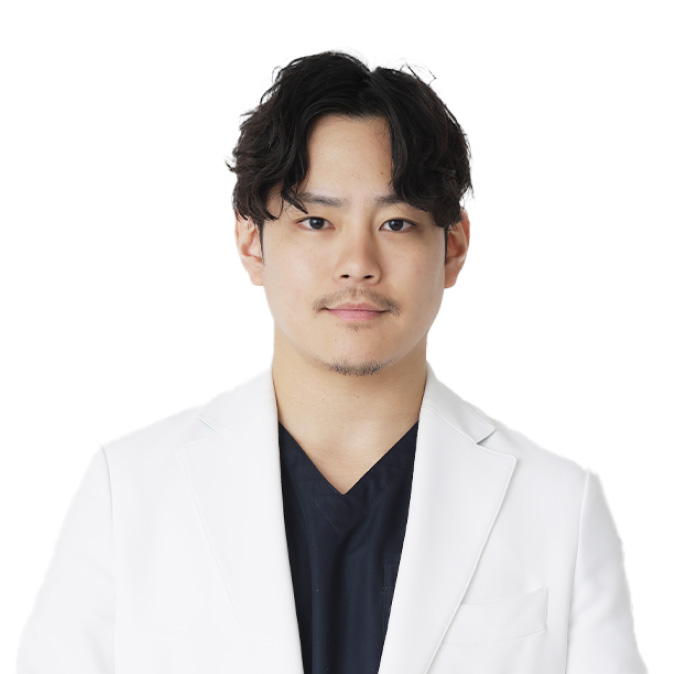
Our clinic places particular emphasis on attentive, individualized aftercare, offering everything from aesthetic dermatology to cosmetic surgery and helping each patient find the option that suits them best — from skin treatments and minor procedures to more significant surgery.
Qualifications and affiliations: Born in Oita Prefecture. BEng, Department of Engineering Physics, Kyoto University. MD, Nara Medical University. Studied at the Joslin Diabetes Center, Harvard Medical School. Previously at Nara Medical University Hospital, Kindai University Nara Hospital, and Tenri Hospital. Founder, Tokyo Bisen Clinic.
※ This article was prepared under medical supervision in accordance with Japan’s medical advertising guidelines. Treatment outcomes, costs, and timelines vary by individual. Please confirm details with a doctor.


👨⚕️ A message from Dr. Ryohei Tsuchida, Director
“I find that the first worry most people considering rhinoplasty have is simply not knowing what they need. At our clinic a doctor — not a counselor — examines you from the outset and recommends an appropriate procedure based on the actual condition of your nose. Cosmetic surgery is medical treatment; deciding on a procedure without an accurate diagnosis can put the patient at risk. Please come in and talk to us. We’ll listen carefully.”
Dr. Ryohei Tsuchida, Director|BEng, Department of Engineering Physics, Kyoto University; MD, Nara Medical University; studied at the Joslin Diabetes Center, Harvard Medical School